 ProZ.com translation contests » | ||||||||||||||||||||||||||||||||||||||||||||||||||||||||||||

 0
0 Source text in English | Translation #24770 |
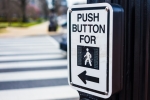
| Over the course of many years, without making any great fuss about it, the authorities in New York disabled most of the control buttons that once operated pedestrian-crossing lights in the city. Computerised timers, they had decided, almost always worked better. By 2004, fewer than 750 of 3,250 such buttons remained functional. The city government did not, however, take the disabled buttons away—beckoning countless fingers to futile pressing. Initially, the buttons survived because of the cost of removing them. But it turned out that even inoperative buttons serve a purpose. Pedestrians who press a button are less likely to cross before the green man appears, says Tal Oron-Gilad of Ben-Gurion University of the Negev, in Israel. Having studied behaviour at crossings, she notes that people more readily obey a system which purports to heed their input. Inoperative buttons produce placebo effects of this sort because people like an impression of control over systems they are using, says Eytan Adar, an expert on human-computer interaction at the University of Michigan, Ann Arbor. Dr Adar notes that his students commonly design software with a clickable “save” button that has no role other than to reassure those users who are unaware that their keystrokes are saved automatically anyway. Think of it, he says, as a touch of benevolent deception to counter the inherent coldness of the machine world. That is one view. But, at road crossings at least, placebo buttons may also have a darker side. Ralf Risser, head of FACTUM, a Viennese institute that studies psychological factors in traffic systems, reckons that pedestrians’ awareness of their existence, and consequent resentment at the deception, now outweighs the benefits. | In de loop van vele jaren hebben de autoriteiten in New York, zonder veel ophef te maken, de meeste bedieningsknoppen die ooit voetgangersoversteeklichten in de stad bedienden, uitgeschakeld. Geautomatiseerde timers, hadden ze besloten, werkten bijna altijd beter. In 2004, minder dan 750 van de 3.250 van dergelijke knoppen bleven functioneel. Het stadsbestuur nam de gehandicapte knoppen echter niet weg, maar nam ontelbare vingers weg, zodat ze nutteloos konden worden ingedrukt. In eerste instantie overleefden de knoppen vanwege de kosten van het verwijderen ervan. Maar het bleek dat zelfs niet-werkende knoppen een doel dienen. Voetgangers die op een knop drukken zullen minder snel oversteken voordat de groene man verschijnt, zegt Tal Oron-Gilad van Ben-Gurion University of the Negev, in Israël. Na bestudering van het gedrag aan kruisingen merkt ze op dat mensen gemakkelijker gehoorzamen aan een systeem dat beweert rekening te houden met hun input. Inoperatieve knoppen produceren dit soort placebo-effecten omdat mensen graag een indruk hebben van de controle over systemen die ze gebruiken, zegt Eytan Adar, een expert op het gebied van interactie tussen mens en computer aan de Universiteit van Michigan, Ann Arbor. Dr. Adar merkt op dat zijn studenten vaak software ontwerpen met een klikbare "save" knop die geen andere rol heeft dan de gebruikers gerust te stellen die zich er niet van bewust zijn dat hun toetsaanslagen toch al automatisch worden opgeslagen. Zie het, zegt hij, als een vleugje welwillende misleiding om de inherente kou van de machinewereld tegen te gaan. Dat is één visie. Maar, in ieder geval bij wegovergangen, kunnen placeboknoppen ook een donkerdere kant hebben. Ralf Risser, hoofd van FACTUM, een Weens instituut dat psychologische factoren in verkeerssystemen bestudeert, is van mening dat het bestaansbewustzijn van voetgangers en de daaruit voortvloeiende wrok bij het bedrog, nu zwaarder wegen dan de voordelen. |

 Discuss this entry
Discussion about Benevolent deception: "The placebo button effect" in English to Dutch - Entry #24770 | |||||||||
|---|---|---|---|---|---|---|---|---|---|
  Francija Local time: 23:41 angleščina - nizozemščina, flamščina + ...
| |||||||||
| Post removed: This post was hidden by a moderator or staff member for the following reason: Please don't post a file that is available to members only on the forum. | |||||||||
| Francija Local time: 23:41 angleščina - nizozemščina, flamščina + ...
| |||||||||
 Madžarska Local time: 23:41 angleščina - madžarščina + ...
| |||||||||
|
|
|||||||||
 Kitajska Local time: 05:41 kitajščina - angleščina
| |||||||||
| Post removed: This post was hidden by a moderator or staff member because it was not in line with site rule | |||||||||


| Sign in to add a comment |
To report site rules violations or get help, contact a site moderator:
| Moderator(ji) za ta forum | |
| Lucia Leszinsky | [Call to this topic] |
You can also contact site staff by submitting a support request »
This discussion can also be accessed via the ProZ.com forum pages.
ProZ.com translation contests
ProZ.com translation contests offer a fun way to take a break from your normal routine while testing and honing your skills with fellow translators.
Contests overview
Professional translators (and some novices) take part in ProZ.com translation contests for fun, friendly competition and prizes.Propose a source text
Suggest and provide feedback on source texts for upcoming contests.Winners
See who has won previously.Statistics
See contest statistics.ProZ.com Translation Contests. Patent pending.
